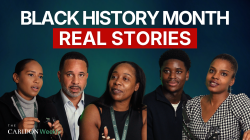
Black History Month: Voices of Power, Pride and Progress
This special Black History Month episode brings together four colleagues from across the Caridon Group for an open and thoughtful conversation about identity, pride, leadership and lived experience. Joana hosts a powerful discussion that explores what it means to stand firm in your identity, how representation shapes confidence and opportunity, and why creating inclusive workplaces requires more than policies or statements.
Each panellist shares personal stories, from school days shaped by resilience through to moments in their careers where they felt seen, celebrated and empowered. The conversation moves through themes of cultural pride, navigating stereotypes, workplace inclusion, community leadership and the changes they hope to see across society and the property sector.
The episode highlights the voices behind our organisation and reflects the values we are committed to: authenticity, representation, opportunity and respect. It is a reminder that diversity and social responsibility are not initiatives, they are everyday practices that help people thrive.
Whatever your role or reason for tuning in, you will gain something from hearing these lived experiences.
Watch the full video below or scroll down for the complete transcript.
JOANA: Welcome everyone to Inside Caridon | Landlord & Property Talk, a special episode celebrating black history. This month is all about honouring black excellence, identity, and leadership. Today we're having an open and honest conversation about what power really looks like beyond the job title. We'll be talking about pride, representation and the changes we still want to see all through our personal stories on the panel. Today we have Caridon team members from a range of roles and positions within the company.
Can I start by asking each of you to introduce yourselves, your job role, and a little about what pride means to you. Can we start with you, Mark?
MARK: Hello everyone, my name is Mark, um, Letting’s administrator. What pride means to me, um, is walking with the weight of history on my shoulders. I'm just being proud in everything I do.
SHERRELLE: Hi everyone, my name is Sherrelle. I'm one of the directors of Caridon. To me, pride is about community, confidence, identity, um, and just walking, you know, walking being proud of who you actually are, your authentic true self.
ANTHONY: Good afternoon, my name is Anthony. I'm the group picture director. Pride? What does pride mean to me? Pride in standing tall in who I am, without apology and without hesitation.
LISA: Hi, I'm Lisa, the office manager. Um, I kind of resonate with what everyone said, um, but for me just to be proud of who I am, my heritage, um, and what I can bring to the community.
JOANA: Can I ask, can you share a moment when you stood firm, either personally or professionally, and really embodied your own power? What did that moment teach you about yourself?
MARK: Where I stood firm? I think it was quite early on in my life. Childhood, especially in primary school, used to get made fun of a lot. Um, and I told my parents and they just told me, stand tall, be who you are, be proud. And I've always stood by that.
SHERRELLE: I feel being a black woman, we have to stand firm everyday. There's so much different adversities that you and challenges that you go through. Unless you're like a black person, you wouldn't actually understand that. So it's like basic things of, and it sounds so cliche, but this happens. I don't know if my, my fellow panellist can agree with me. A lady walked past me, hold her handbag, just like little things. Like if you're on public transport, you just constantly have to be aware of your surroundings and you're always feeling that you have to fit into other people's narratives.
ANTHONY: And yeah, it's quite difficult sometimes for me, the black man grew up in the 70s. I can tell you school years, school years were, were testing, yeah, for one to the better word. And I can tell you my year, I was one of four black people. The rest were, was all white. So you can imagine what the days were, were like or what it could have been like. So yeah, you had to stand for him to look after yourself. You have to be tough.
LISA: My parents and culture, how I was brought up, my parents enforced that I had a voice. So it was never a case of, um, having to feel I've go in the extra mile. I've always spoke up when I felt something was wrong. Um, so, but that's the case of how I was brought up. My parents, uh, was brought up in 60s where there was a lot of racial tensions happening. And I think just naturally being, uh, having that background where they had to fight a lot. My parents encouraged me to be firm with how I represent myself, how I talk. So I think just in general, naturally as I walk, I stand firm, I'm confident. And I, I say what I need to say.
JOANA: Just wanted to add a little bit and say I feel like sometimes it's easier for us to, um, to stand firm in the community rather than in the workplace. I feel like because of the hierarchy in the workplace, sometimes it's hard to, to stand in your own power definitely. Um, but I think it's a challenge that we, we're fighting.
JOANA: Okay, thank you guys. Um, in your view, what does true leadership look like in our community?
MARK: Just say true leadership, especially in our community. I think it's not about just titles, money, and power, but it's about your vision, your service to others as well. Um, think someone that uses their influence to lift others, not just themselves, um, community.
SHERRELLE: So in our community, who would you classify as a leader?
MARK: I think we're all cheerleaders. I think we're all born to be cheerleaders. And especially today society, we see a lot of our people ourselves putting each other down when we should be here to lift each other. So I feel like being a leader in our communities. Well, he's actually giving the right service to your neighbours, to your friends, to even strangers. And I feel like that's the true meaning of leadership in our community.
SHERRELLE: Wow, um, mine was a bit deeper than that. So I would feel like, I feel like a true leader is someone called Harriet Tubman. So she Fred all the slave through the railroads, yeah um, back when in America, when slavery was rife, and she was so resilient, so strong, so bold. She put hers, her life at risk and herself at risk to free others. So for me, a true leader is someone that go against the grain sometimes. Um, I feel like sometimes when people get in certain positions of power, they, they're too scared to, to ruffle any feathers because they just wanna, like fit in. So my, my definition of a true leader is someone that fights for the right decisions to be made and stands up for justice.
ANTHONY: Really for me, it's about leading by example and creating pathways for others, uh, to thrive.
LISA: I think what Marks said resonates with me the most. Um, leaders who uplift the communities, uh, is the best form of leadership. Um, I think in the black community, we need more leaders. We can do our bit here and there, but we need some more leaders. I wanna be cool in there. I wanna be sitting here saying, well, actually this is a really good leader in the community. And I think sometimes when we associate leaders within the community is that it's to do with something to do violence, like there is a guy in the community, um, negative attention, sorry. So there is a guy in the community, I can't remember his name is gone, and he's sought in knife crimes. He gets the knives. Yeah yeah, yeah, right from from an, from the estate, right, yeah, absolutely. And he is a brilliant leader, but again, it's for knife time. And then we have the guy that goes around that looks at properties, and they sorts moulds in their properties. He's another brilliant guy, but at the same time, it's, it's to do with something negative. Um, so, you know, I think I would love to sit here and say, you know, this person's lead, that person's a leader. Um, but I think what Mark said resonated with me the most, to be fair.
JOANA: Just to add to that, I think sometimes we were given a sector, so we've got people like Stormzy who's doing a lot for his community, but they're rappers or they're footballers or, you know it. We have certain sectors that they, kinda allow us to dominate, and outside that, it doesn't, kinda happen.
LISA: Also, so, it's like, I expect you at the same time, like, we do have people like Stormzy who's brilliant, to be fair, and he is doing a lot for the community. We got the football pitch, we got everything, but again, what is our government doing? Yeah, and it's that everyone's that, well, actually look, look at those people they're doing for your community, and we, you know, we have to look towards rappers, we have to look towards football, footballers rather than the officials.
JOANA: Okay, thank you guys. So Black History Month is also a time to celebrate cultural pride and to be honest about the challenges that come with it, especially in professional spaces. Have you ever felt pressure to downplay or hide aspects of the identity at work? How did that experience shape you?
MARK: Well, when I'm comfortable at home out with my friends, the way I dress is not really how I dress when I come to work, but because I wanna be seen in a positive light and I don't wanna be seen negatively, um, I change the way I dress. And maybe now it's not a thing that's on my mind, but it's been so ingraining me that is subconscious thought that I do know that I feel like I need to kind of go above and beyond and to impress the ones above me just to make sure that I'm not seeing in a negative light. I think it's shaped me in two ways. It kind of brings me out my comfort, comfort zone. Um, it puts me in a place where I see more of the world kind of and see how people see me. Um, but then again is like, I'm kind of changing myself and changing who I am for someone that doesn't really understand where I come from and someone that doesn't understand the community that I'm in.
SHERRELLE: I think when you're in employment, I think you everybody, whether you're black, white, Chinese, Asian, you do need to come to work in a professional, like you do need to dress smart because you're dealing with like external stakeholders, your colleagues, and naturally they're gonna take you differently. Um, I, you know, there's some things that I don't agree with. So I wouldn't come to work as a black woman with a bonnet on my head or head. Yeah, unless it was for, because unless it's for like religious purposes, because that's not professional. Yeah, outside of work, I dress how I wanna dress because that's my identity. So if I wanna wear baseball cap, big hair earrings or a baggy Jersey, I'm gonna do that cause that's how I want to dress. But in work, I do think it's really important to be like boundaries and dress professional because people will take you a bit more seriously.
ANTHONY: Hmm okay, me personally, I never had to time play who I am, I never will, cause what you see is what you get. It's me.
LISA: I wish I had that experience. Um, no, I would never say I've had to downplay, um, but I have been in environment where I'm considered the, the tickbox. I am that token girl, um, and I think just naturally I've had to curb the way I speak. Um, and is not to say that I speak unprofessionally, but certain words and certain phrases, well, you know, you can't say those words in front of people. Um, so I have felt the pressure, I have felt like I was a tick box and actually it made me unhappy. I'm not there now. Um, so I would like to be at a place where I'm celebrated, um, for the kind of person I am or what I can bring, you know, I'm celebrated on my, my talents and my efforts that I, I bring into the workplace. Um, so yes, unfortunately, I have felt that, that pressure and, um, I've had to navigate. It's not a nice experience. I did it, um, to, to further my career path. Um, but, yeah, it is not a nice experience, to be fair. And I was, I did felt pressure, um, to constantly watch how I spoke. Um yeah, because I don't know, it's like, can you speak ghetto? Is that considered a black thing? Like, what do you mean by that? Um, so, yeah, it's, it's not nice.
JOANA: I think I've had to be aware of the, the angry black woman image, um, in dealing with others, you know, be careful. Hold, hold my tongue, count to 10, be careful how I speak. Um. Because where I know my community, people understand me. Like in our office, we speak very openly. In other spaces, we won't be able to speak that way. So I think that, that's something that's always on my mind.
SHERRELLE: Thank you. I find that particularly triggering. Yeah, meet the Angry Black Woman narrative. I feel like people just misunderstand people and because this, they're not this scared of different people being different. They might not have been around a woman of colour before, um, within the workplace, or they might not have women of colour as friends. Yeah. So anything you do, you could say something or you could, you know, you could say something and they take it the wrong way. Yeah. And then they portray themself as a victim and make you feel like, you know, you're the bully or you're the problem. And for us, for it, it becomes quite draining. It's draining, and then laying, it's an excuse, it's an excuse it's an excuse that being, it's something that's easily said and straight away you will get people around, understand. Oh, I know what you mean, yeah you know, and there's, there's no context to it, full stop. If you have a different opinion, a different level of speak in your speaking voice, you know, you can easily be put into that category, you shut down 100%. You don't wanna even hundred, but so scared to even say anything to that person. Yeah, for people, yeah, because you're thinking, oh, if I say this, they're gonna take it the wrong way, and I'm gonna go back, so you shut down. I don't know, it means a lot.
LISA: It happens with the odd content we we all know, we all know, and again is something that's so easily flung out there, and people say, oh, yeah, I know what you mean. You know, they don't even ask for context behind why why, why did you say that? It's not that they just, okay, I know what you mean, and it's not fair. It's not, like, um, racism or form of trauma for cause it's traumatic from an early age, like, school. Um, I had a really bad experience at, at school. Then it makes you just feel like, oh my gosh, I really can't say nothing. I'm just gonna, you shut down. Yeah, was the aggressor, yeah, actually, yeah, as the aggressor, I think sometimes when we do voice our opinions or stand up for us, yeah you know, they look at you will means a bit aggressive than that. Yeah yeah, that way, you know, even though you're so much, I'm probably the victim behind you. Yeah, and I'm just more passionate, cause it's happening to me. Well, you're just tired. You just got such a drained Molatone about it that you just nothing.
MARK: That's why, is all why we're so prone to holding in our emotions and not saying anything. We have very much high rates of depression suicide. And I feel like that's one of the main reasons why, cause we feel like we can't voice our opinions and voice why have you say certain things of.
JOANA: Yeah, of course, hundred percent, thank you guys. On the other hand, let's flip it. When have you felt truly proud to be seen and celebrated as a black professional, whether here at Caridon or elsewhere?
MARK: Yeah, I can answer this one. Alright, um, so I will say my uni days when I finish uni, um, I was the out of me and another black person, I was the only us 2 that managed to end up finishing the course. Thank you, and, um yeah, I was really proud of myself, my family was really proud. And to be, to be honest, I had the thoughts of, you know, dropping out and giving up, but I said what's the actual reason why I wanna drop out, and why can't I keep going and prove everyone wrong, um, again as well in uni had quite bad experience of racism. But I gave myself that excuse for me to keep going, keep pushing and finish what I'm doing and make everyone around me proud. Yeah,
SHERRELLE: And in my career here, I've worked my way up into my role, current role. But, um, I was doing a project with DWP, um, so I went to the director general's office in Parliament and I was part of a board and on that board I was the only female and then the only female of colour. And it was just like all middle class white men. And I felt really empowered to be sitting in that room. And I was on the board for six months and I helped make some like changes, um, with you see, and how direct payments are made directly to landlords. I felt heard, but it was difficult cause you're in that room and there's no representation. So there's no one that looks like me, dresses like me, is my age. I felt really out of place, but I just was resilient with it cause I felt like I deserve to sit at that table. So I've walked in, like, I deserve to sit at that table. So, yeah, full of having that mindsets fat important, because you could have sat at that table and not said a word as all. Because, you know, you might feel intimidating. So I feel like always having that mentality saying that you can make a change, no matter who's around me, is the good thing to have.
ANTHONY: Yeah, yeah, absolutely. Um, for me, it's, uh, probably my presence being able to open doors to other people. And, um, on one occasion about the young, young coworker come to me and say the position that you're in. I'm glad to see you in it. And it give me belief that I too can attain that position similar to that in the future. If it makes me cry, cause it means that you're making an impact, younger generation as well.
LISA: Well, mine doesn't, actually, I wouldn't say it resonates, kind of in my work in 9 to 5, but, um, I used to sing many moons ago. I'm gonna, no, don't you bully, but since you said that communication anyway. Um, but me, uh, in my, in my previous life, I used to sing, um, and I actually got to perform, uh, to Nelson Mandela for Nelson Mandela, and I got to meet him, shake his hands. Um, and it's so funny. I think at the time I probably was 16 15, 16 years old, um, and I didn't realise how powerful that moment actually was. Um, now that I'm grown, um, it's one of my proudest moments. Um, I tell my kids about it, they've seen the, the pictures and everything, um, and also I think the fact that my parents were there and they was ecstatic as well for me, absolutely exactly. And that's that's but, but at the time, I don't think I was aware of just how powerful of a leader he actually was. Um, and I, I knew his name and I knew little bits here and there, but now that I'm older and I realize actually I did that I did, I did that, absolutely I have to pat myself on the back, right?
JOANA: So from your perspective, how can workplaces genuinely celebrate cultural pride and inclusion, so it feels real and not just a tick box exercise?
MARK: But I feel like we could do with, um, growth in all aspects. So, um, not just hiring people of colour, but let, um, helping them progress, letting them progress and get to that points where they would even have thought they would be. Um, I think a good example is Caridon actually, um, we let people progress, have a say also, and just, yeah, that she just has the limit.
SHERRELLE: Yeah um, I feel with Caridon, it is probably one of the companies that I've worked in, um, that I have a diverse SLT team, so it shows representation to the, the young people coming up in, in, you know, on their career journey. Um, I don't think it's just the employers responsibility. I think it's the employees and the colleagues responsibilities, because if their mindset and their behaviours from outside of the professional setting doesn't change, then obviously they're gonna bring them attitudes into the workplace. And then it doesn't matter what you do at the top. If you got people that don't believe in the diversity and the, the change, then there's always gonna be a problem.
ANTHONY: I think we need to celebrate people's culture and embed that in our daily practice. It can start from the top, but I think it needs to start from the ground up as well meet in the middle exactly. Yeah, cause some people may not even, you know, I don't know if it really works here. But when I do meet them, you know, we, we sit and we discuss some reason to a degree. That's how you get to know people, but also you gotta be open minded as well. And then that's that's, that's part of the battle once people are open minded and open to learning new things, cause people always say on their CBS, yeah, I like to go and travel in this, and then sample different cultures. But do you really? Yeah yeah, so, I mean, so until you got that open dialogue and people embrace people's culture, yeah yeah, that's what we need to do to make the changes going forward.
LISA: I think, um, I think what Anthony said was perfect under Caridon where I work, particularly Foundation. We are all from different backgrounds and I think we all celebrate each other from bringing in different foods. We celebrate people's version of who's got the best Jello fries to who's got the best jerk chicken. Um, and, um, exactly cause he's not a part of foundation. Um, and that's, but this is what I love about our particular office. Um, we do celebrate each other, yeah, and we do celebrate each other's heritage. Yeah, and we can be our authentic self, um, in Caridon, which is, which is lovely. And that's one thing I do applaud, one thing I would like, um, to see, not necessarily here, but in general, we've been in trouble to have our hair out. If we have our hair, an afro is, is frowned upon schools, is frowned upon doing your hair in a hairstyle. As black people, we naturally do hairstyles. That is our culture. And we can be told off, uh, or look down upon for having something as basic as doing your hair or make it look presentable how they feel is presentable, um, which, you know, but again, thankfully in the workplace that I work that doesn't happen, but I know it happens a lot. You know, people that have, um, locks, you know, have been frowned upon. Um, again, we have, uh, a lady who works with us who has locks and is celebrated. Yeah um, but, you know, that's something that I think, uh, can definitely be.
JOANA: I think to add to that, I would say the right person for the job. I think a good way to celebrate cultural pride is making sure that everybody is in the, not because I know you or not because of the colour, your skin, but I know you do brilliant job at this and make sure that person gets there. I think that's a good way to celebrate to, I see you, I see your strength, this is perfect for you kind of thing. I think that's.
LISA: But I think just even for Caridon in general, the brilliant thing we do offer here is I do feel like I can grow. There is people, um, that, you know, are in really high positions, um, and they're black. Hmm, they're black. So for me, it's an encouraging saying when I feel like actually they're up, then they want me to win as well. They want me to succeed. Um. If I did go to any of them, I can have that conversation, say, well, they actually, this is how I feel. And they can tell me if I'm being a bit too over zealous or no, you're absolutely right in how you're feeling and encourage me and guide me because they're in that position. And if again, I know that they want me to win. So if I said, I wanna grow, they're gonna look at ways to help me grow. And that's the beautiful thing.
JOANA: So can I ask who inspires you and why? This could be someone iconic, a family member, friend or mentor.
MARK: Not to be too cliche, but someone I couldn't, I think is Rosa Parks. Um, black woman was funny, it is cliche, it is cliche, but I feel like all that she stood for something very important. Yeah, I think she was more than this woman who refused to give up her seat, but she, um, was a symbol of quiet strength. Being a black person, especially a woman at that time, was very hard. And she went, um, against the green. That influenced a lot of people. I feel like she still influences people today. I think she, we all have a bit of Rosa Parks in us. I think that that, that one thing she did and she has affected all of us.
ANTHONY: Can we be honest? Yeah yeah, yeah, I need to think. We had questions given to us pre just in, um okay, the person inspires me is my wife. She inspires me every day, um, just because of what she does to what she does. She's creative. She pours her heart and soul into it. And she was recognized by winning the BAFTA for it. So for me, that's inspiration.
LISA: That's lovely. Um, I have a few people, um, my mother being one of them. Um, just her whole general outlook on life, um, her positivity speaks volumes. Um, and actually she is someone that I can turn to no matter how I'm feeling. If I'm elated, she celebrates my highs and she's with me on my lows. And also my nan, um, some of the things she's had to face in general coming to this country as an immigrant, um, as some of the stories I heard are horrific. Um, and the fact that the type of woman she is now is like, you would never know that those are some of the stories and traumas she's had because of how she carries herself today. And what she's, um kind of, embedded our foundations to be, you know, treat one another kind, you know, treat people how you wanna be treated. All those things was embedded for my nan, but also like what you said, your partner, my partner, um, he is a, a true sign of someone that, uh, how he carries himself, how he thinks and feels, how he empowers me, um, just with the outlook of life. When I need strength, he's there in every kind of way. So I have a few people lovely.
SHERRELLE: Oh, um yeah, so like everybody, Rosa Parks standardly, I was winding what when I said cliche, cause you said no, but I know, but I didn't want you to, I don't want you to feel upset. No, cause I respect Rosa Parks, and I don't want people to think that. Okay, mine would, I would say is, um, my mom naturally, because she's always been the head of the house, even though my dad's there. And my dad, of course, um, my nan, my nan, I feel like I get a lot of my resilience, my drive, my ambition from my nan, cause when she came over from Jamaica, she was by herself. She had like five children. She, um, was a dress maker, was making dresses and she managed to buy a house in cash. Like she got a loan back in the days, you couldn't get mortgages, especially being a black woman. So she got a loan from a Jewish man and he bought the house, but she would pay him. That's why my nan, I just feel like she found a way. She wanted this house, beautiful house in Britstone and she bought the house. She found a way. So she didn't. Yeah yeah, and she found someone that believed in her, trusted her, and gave her that opportunity. So and then obviously Harriet Tubman because she freed the sleeps.
JOANA: So as I'm listening to you, I'm thinking, you know, the president of Wakina Faso, like he has brought a whole new energy for black people right now, which is really, really inspiring me. But then listening to you guys, I'm thinking my dad, who I think is an afterthought because of the kind of men that I've been dealing with. I've realised what a gem he was. And he now, he's almost my inspiration for the ideal man as a father, not even as a husband, but as a father. He, he really stood out for me, diamonds man.
MARK: I see my parents, of course, as well. Everyone's resonated with me, um, again being the black couple coming from, um, Nigeria, especially is, it was hard. My parents came separately. My dad came up about 3 years after, um, and they went against all norms and they done. They didn't let their colour get into, get in the way what they want. Um, now they're very successful. I'm very proud of them. Um, they work together from the start, and as you said, when you have come some of the stories that they have, you will never really think this is here become today. Um, so, yeah, they're really a big inspiration and proud of them, and I aspire to be like them.
JOANA: No. Yeah. All right, quickly one at a time, what would have meant to you to see someone, uh, like you in leadership when we're younger?
SHERRELLE: When I grew up, there wasn't any black body that was black that was, that I could look up to as a leader. You had to look in in your, like, in your home. You had to look at your parents, your grandparents. I feel like in my generation, a lot of our values and morals, um, come from our grandparents. Um, cause obviously mom, dad was out at work, would be with grandparents. But then the grand, our grandparents are the ones that face the adversities with the no dogs, no blacks, no Irish. And they're the ones like I remember my grandad was telling me a story that when he came over to the UK, he went for a job at, um, Wilkinson's Wood. And he said when he got to the job interview, they told him that he can't get the job cause he's black. He said he used to go to pubs and they would not serve him. And I was like, what? And you had that cause I was, I was like, what you didn't. He rude. And he was like, no, my dear, no, I just turned other cheek. And I was like, so I feel like some of them values that our grandparents, they've passed down to us. So that's probably where I take it from grown UPS, um, leadership really looked like me.
ANTHONY: She would say, yeah, so and with the absence, it teaches you to question your place. Yeah yeah, yeah, so if you see a black man leading with confidence, compassion, authenticity, that makes you feel, yeah you know, I could be that person. That door can open for me as well. I can be that person one day. And obviously all depends upon your own previous Learned experiences. So for example, for me growing up in the 70s and 80s at school come to deal with racism, etc, etc. You have a different outlook. But then if you see a man, a black man in a high position, you know, it's possible.
LISA: Um, it's funny because I think by the time my generation came about late 80s, 90s, times were different. Um, I think my parents always brought us up to be leaders. So I always thought, whatever I'm gonna do, I'm gonna try and be the best out anyway. And that was always preached in my head. So I never thought for a second, uh, I would be, you know, I needed someone to be in that position in order for me to get to that position. I thought, if I want it, I could get it. And that's kind of how my parents brought me up. No, if you want it, you got to work hard. The only thing they installed in me is that, well, you know, depending your profession, if you ain't got the right skin colour, you might have to work a bit harder. And that's the kind of thing that was put in. But my parents at the same time said to me, go for it. There's no reason why you can't go for it. Like life's about knockbacks and setbacks. It happens, get over it, just keep striving, keep doing you. And I was lucky. I'm the youngest of five children that all of my brothers and sisters went became successful on whatever path they wanted to do. So I had leaders in that way, including how my mum's, what my mum's role was for, you know, being in the house, etcetera to my dad's, uh, working his way up and becoming a leader. So I saw that and it, it guided me. So for me, you know, it, I don't know if it would have done anything more for me because I saw that happening anyway.
JOANA: That's interesting because I feel like it would have done something for me cause coming from a African household, it was very much know your place, stay quiet, really don't make too much noise. Um, you don't wanna be seen like you know, it was you can't, you know, if you work hard, you can do whatever you do, but just do it quietly, just don't make too much noise. You know, they're judging us is that's inherited trauma.
LISA: You see what your parents, your parents were protecting, yeah, yeah, by losing, you know, from certain things that may have happened where or, or just stopping certain things from happen happening to you. Yeah, absolutely where is. I think my dad was more of a he, he was more of a fighter. He didn't care. He, well, he, he was brought up in the days where there was a lot of, you know, racial tensions, where he got beat up just because of his skin color. And my dad's like, look, I'm here, I'm here. No one hurt me. I did what I needed to, I fought back. And he, that's, that was his position. So when it came to raising a child, he was be unapologetically yourself. And he was very much like, that was obviously rare Caribbean. My mom's mixed race, so my grandma was white, but, um, I think her going through that struggle made her feel like, listen, you just need to, because I know how they feel about black people at. So she was, she was very much just, just stay in your place, please. Because this is what they're thinking of you. Cause she knew that, cause her half of family was white. It was a part of her experience she didn't want me to go through, but she knew what people were talking about, saying about us. She could fit in a little bit, cause she's got the lighter skin. Um, but she feared for us, my brother who my eldest brother, who's the darkest, who went down the educational route, got his masters in maths in, and all of that again, you know, as much as I would say, he's more formal out of all of us. Um, again, that was preached to him as well, like my brother. If he could tell you how much he loves his skin, I let him down. You know, for him, that's, it's a beautiful thing, so he is so proud of his background, how he carries himself, but at the same time, that was taught to us, but my parents, our parents said it is what it is. If you don't get it, you don't get it, you move on to the next one. It's their loss.
JOANA: The African household. You get to school, your mom's beating you before the teachers even explained, really. Yeah yeah, yeah, I felt for being called into school in the first place, like what have you done for me to be called into school? Like she's not even waiting for the teacher. What did you do, young lady? Kind of thing. So it was a different because I think it likes, it is a trauma thing. It's coming from Africa, they had to hide. They had to, you know, there was a shame, there's a shame. Was your parents born in Africa over here? My mom was born in here, my dad Ghana. See, like our parents, my parents are born here, so their first generation, yeah, so it's different. So, um, perhaps, yeah, they've come from cause then, like like I said, how my grandad acted, yeah, completely different to how my mom and dad had acted.
SHERRELLE: My nan, she was the generation, the wind rush generation. When they came over, etc. She was like, I need to blend in, because I don't wanna be shit towel. I don't want tools, no trouble, and I don't have no Protection. Yeah, I had, she had to look to other, you know, people, um, who's come over as, as friends and, and, kind of, build a community by herself. Whereas by the time my dad came, there was, my dad was here, actually my dad was born here. But I'm saying by the time he was born, there was a whole generation full, full of, and they had to fight it. Just it, it's what it was, you know, yeah yeah yeah yeah yeah yeah yeah yeah, they had to fight. So where my dad is a tough cookie, he, kind of, raised me that same mentality that I was saying absolutely. It is what it is, whether people like you or not, stand your grounds, be who you are. If you're not celebrated, move away. Yeah, it is what, it is.
JOANA: What changes do you hope to see in our society, in our industry, or right here, character economical empowerment, especially in our black community.
MARK: Oh, yeah there's been a lot of, you know, black owned businesses, black individuals that are coming up and trying to create generational world for themselves. Um, I just feel like we need a bit more resources to help with that. Um you know, there's a lot of less foots, let's say, for example, artists, rappers that are generating the money but don't know what to do with it. And I feel like having that guidance and, yeah, just having that guidance of how we can create that generational wolf because I'm sure everyone does wanna create that, that wolf, that who run in their family for years and years to come. So I feel like having that guidance and just having like a, a mentorship where we can learn from each other and learn from people who, who have created that generational world from people of colour especially. Um, I think changes that, that will help.
SHERRELLE: Honestly, yeah, I think in society, I feel that everybody needs to accept other people and their differences, their different beliefs, everyone being the same is quite boring. The tension at the moment on immigrants is is quite is, is quite traumatic, is triggering. It makes you think how we even got here in 2025. Um you know, you had comments, oh, they're taking our jobs when sometimes it's jobs that people don't wanna do, most like jobs people don't wanna do. Delivery drivers, how much times you see like care homes? Yeah, so I just feel like acceptance and just respecting people's individuality and their, their differences.
ANTHONY: I don't think there's anything that I would change because in Caridonfeel that we do celebrate everybody else's culture and the background from whether they come. And I feel people do feel like they do belong, um, when they work in Caridon. And I just to take that step further. The people with which we serve the tenants, etc, they are of a diverse background. So I think we need to mirror that, which I think we do. Well, um, for the greater society, yeah, a lot needs to change and I don't think we have the time here to discuss that.
LISA: Um. It's a hard one because I think we all, what's the word? We're all absorbed in our kind of own world. So in my world now, I'm around people black people who are celebrated. And I love that for what I see and what I can inadvertently tell my children, you know, I'm in a workplace that actually having the skin colour that I have is never been an issue and it's never a problem, never a topic of discussion. Yeah um, I would love it to be like that for the wider society at the moment, there's huge racial tensions. Um. And it's funny if you see someone who's patriotic about being English, you do scratch your head and say, are they racist? You know, these are the people that could be your neighbour and now you're starting to question whether they're racist or not. And actually I don't wanna be in a society where is looked at like that. You know, I'm happily I'm, I happily celebrate my heritage, but also I'm happy I am also British. And I would like to say that if I was to say, if someone, my neighbour had a flag and they was white, that they weren't racist, I just, but it's something I question right now. I question and it makes me question a lot what's going on. And I don't think in 2025 we should be having these sort of conversations or these thinkings. Absolutely we've gone backwards. Um, so, yeah, my thinking is that we could move forward and not be dealing with this right now.
JOANA: Um, I would just act to that and say, I think we need more empathy in society, just like I say, even one of our own colleagues was saying some wild things about they're coming over here taking our jobs and, and they're not even British, which was weird to me. But I just feel like we need more empathy as society because unless you're in something, you really, really don't know what someone's going to find you. People assuming, they just fleeing. Why would you want to leave your home and everything you built to go to country you don't know anybody in or anybody? Yeah, of course, there's a NHS system, but that's a big issue there. And I think society just needs more embassy. I feel that people are brainwashed into thinking, yeah, a lot of stuff. There's a lot of scare, scare tactics. Yeah. Fear stronger than love, right? Yeah. So if you fear something, your love's gone out the window. And that's what happens now people are scared. That's what do black people supposed to be black was that fear, that, oh yes, yeah, we're all there in hoodies, they're on there. Yeah, that is constant. Is that constant? They're wearing black. Yeah, there's a group of them. You know, they're dangerous. You know, I also wrote in there, yeah, literally. And I thought that my son used to say that to me all the time. He used to literally call me. One day he's like, mom, I'm so upset. I said, why? I'm walking by this lady and she crossed the road and she keeps looking back, so that did she think I'm gonna rob her as I'm sorry that unfortunately, this is how people see black boys now, but they do it to women as well. Yeah, lucky mention, it happens to women as well. Like other women, if you sit on the train next to them, they move their staff and, yeah, don't want you to sit next to them. But so, yeah, it's crazy.
JOANA: Okay, and finally, as part of the Celebration of black excellence and progress, what message or advice would you share with the next generation?
MARK: Think, be yourself and be proud to be who you are. Don't stop building yourself. Um, learn trades, learn skills. Um, just try and open as many doors as you can. Because I say the more doors you open, yeah, the more chances you have to be successful.
SHERRELLE: The advice I would give to people is be true to yourself, never give up. Uh, just keep going and just believe in yourself.
ANTHONY: Yeah, I think I, I echo both, yeah, what you both said. Um, but also for me, I would tell the next generation just never dim your light to make others feel comfortable. Absolutely, that's a no, no for me. Be who you are, be unapologetically yourself. Uh, be fearless, uh, not scared to take advice or listen to advice, not sweet.
LISA: I love that. I think that, that it takes the life experience, isn't it? When we're all young, we think we have to, and now I can confidently said, no, I'm not comfortable with that. No, I won't be doing that or advocate for someone else. You know, so I think, yeah, it's important always.
JOANA: And finally finally, finally, before we go, I just wanna say thank you for sharing stories and voices as part of our Black History Mob. Today reminds us that power isn't defined by title, titles, is about authenticity, lifting others, and the legacy we were built for those to come after us before you go. Can you recommend a book or a favourite quote?
MARK: Our pride is our power, and our presence is our proof. Love that, thank you very much.
SHERRELLE: So I'm gonna leave a quote by Martin Luther King Jr. Injustice anywhere is a threat to justice everywhere. So with that quote, it means that when unfairness or oppression happens to one group of people, it affects everyone, even those who, who are not directly involved. So I think that's important to understand.
ANTHONY: And for me, a book that I've read is “black and British”. That's a good book to read.
JOANA: Okay, it's good. Okay, I will just add a very small quote that is says something like 6+ 2 is 8, so is 4+ 4, which basically says there are numerous ways to do things and still arrive at the same. So we don't have to feel like we need to follow somebody else's go however you feel.
JOANA: Yeah. Well, thank you guys. Thank you.
Black History Month: Voices of Power, Pride and Progress
This special Black History Month episode brings together four colleagues from across the Caridon Group for an open and thoughtful conversation about identity, pride, leadership and lived experience. Joana hosts a powerful discussion that explores what it means to stand firm in your identity, how representation shapes confidence and opportunity, and why creating inclusive workplaces requires more than policies or statements.
Each panellist shares personal stories, from school days shaped by resilience through to moments in their careers where they felt seen, celebrated and empowered. The conversation moves through themes of cultural pride, navigating stereotypes, workplace inclusion, community leadership and the changes they hope to see across society and the property sector.
The episode highlights the voices behind our organisation and reflects the values we are committed to: authenticity, representation, opportunity and respect. It is a reminder that diversity and social responsibility are not initiatives, they are everyday practices that help people thrive.
Whatever your role or reason for tuning in, you will gain something from hearing these lived experiences.
Watch the full video below or scroll down for the complete transcript.
JOANA: Welcome everyone to Inside Caridon | Landlord & Property Talk, a special episode celebrating black history. This month is all about honouring black excellence, identity, and leadership. Today we're having an open and honest conversation about what power really looks like beyond the job title. We'll be talking about pride, representation and the changes we still want to see all through our personal stories on the panel. Today we have Caridon team members from a range of roles and positions within the company.
Can I start by asking each of you to introduce yourselves, your job role, and a little about what pride means to you. Can we start with you, Mark?
MARK: Hello everyone, my name is Mark, um, Letting’s administrator. What pride means to me, um, is walking with the weight of history on my shoulders. I'm just being proud in everything I do.
SHERRELLE: Hi everyone, my name is Sherrelle. I'm one of the directors of Caridon. To me, pride is about community, confidence, identity, um, and just walking, you know, walking being proud of who you actually are, your authentic true self.
ANTHONY: Good afternoon, my name is Anthony. I'm the group picture director. Pride? What does pride mean to me? Pride in standing tall in who I am, without apology and without hesitation.
LISA: Hi, I'm Lisa, the office manager. Um, I kind of resonate with what everyone said, um, but for me just to be proud of who I am, my heritage, um, and what I can bring to the community.
JOANA: Can I ask, can you share a moment when you stood firm, either personally or professionally, and really embodied your own power? What did that moment teach you about yourself?
MARK: Where I stood firm? I think it was quite early on in my life. Childhood, especially in primary school, used to get made fun of a lot. Um, and I told my parents and they just told me, stand tall, be who you are, be proud. And I've always stood by that.
SHERRELLE: I feel being a black woman, we have to stand firm everyday. There's so much different adversities that you and challenges that you go through. Unless you're like a black person, you wouldn't actually understand that. So it's like basic things of, and it sounds so cliche, but this happens. I don't know if my, my fellow panellist can agree with me. A lady walked past me, hold her handbag, just like little things. Like if you're on public transport, you just constantly have to be aware of your surroundings and you're always feeling that you have to fit into other people's narratives.
ANTHONY: And yeah, it's quite difficult sometimes for me, the black man grew up in the 70s. I can tell you school years, school years were, were testing, yeah, for one to the better word. And I can tell you my year, I was one of four black people. The rest were, was all white. So you can imagine what the days were, were like or what it could have been like. So yeah, you had to stand for him to look after yourself. You have to be tough.
LISA: My parents and culture, how I was brought up, my parents enforced that I had a voice. So it was never a case of, um, having to feel I've go in the extra mile. I've always spoke up when I felt something was wrong. Um, so, but that's the case of how I was brought up. My parents, uh, was brought up in 60s where there was a lot of racial tensions happening. And I think just naturally being, uh, having that background where they had to fight a lot. My parents encouraged me to be firm with how I represent myself, how I talk. So I think just in general, naturally as I walk, I stand firm, I'm confident. And I, I say what I need to say.
JOANA: Just wanted to add a little bit and say I feel like sometimes it's easier for us to, um, to stand firm in the community rather than in the workplace. I feel like because of the hierarchy in the workplace, sometimes it's hard to, to stand in your own power definitely. Um, but I think it's a challenge that we, we're fighting.
JOANA: Okay, thank you guys. Um, in your view, what does true leadership look like in our community?
MARK: Just say true leadership, especially in our community. I think it's not about just titles, money, and power, but it's about your vision, your service to others as well. Um, think someone that uses their influence to lift others, not just themselves, um, community.
SHERRELLE: So in our community, who would you classify as a leader?
MARK: I think we're all cheerleaders. I think we're all born to be cheerleaders. And especially today society, we see a lot of our people ourselves putting each other down when we should be here to lift each other. So I feel like being a leader in our communities. Well, he's actually giving the right service to your neighbours, to your friends, to even strangers. And I feel like that's the true meaning of leadership in our community.
SHERRELLE: Wow, um, mine was a bit deeper than that. So I would feel like, I feel like a true leader is someone called Harriet Tubman. So she Fred all the slave through the railroads, yeah um, back when in America, when slavery was rife, and she was so resilient, so strong, so bold. She put hers, her life at risk and herself at risk to free others. So for me, a true leader is someone that go against the grain sometimes. Um, I feel like sometimes when people get in certain positions of power, they, they're too scared to, to ruffle any feathers because they just wanna, like fit in. So my, my definition of a true leader is someone that fights for the right decisions to be made and stands up for justice.
ANTHONY: Really for me, it's about leading by example and creating pathways for others, uh, to thrive.
LISA: I think what Marks said resonates with me the most. Um, leaders who uplift the communities, uh, is the best form of leadership. Um, I think in the black community, we need more leaders. We can do our bit here and there, but we need some more leaders. I wanna be cool in there. I wanna be sitting here saying, well, actually this is a really good leader in the community. And I think sometimes when we associate leaders within the community is that it's to do with something to do violence, like there is a guy in the community, um, negative attention, sorry. So there is a guy in the community, I can't remember his name is gone, and he's sought in knife crimes. He gets the knives. Yeah yeah, yeah, right from from an, from the estate, right, yeah, absolutely. And he is a brilliant leader, but again, it's for knife time. And then we have the guy that goes around that looks at properties, and they sorts moulds in their properties. He's another brilliant guy, but at the same time, it's, it's to do with something negative. Um, so, you know, I think I would love to sit here and say, you know, this person's lead, that person's a leader. Um, but I think what Mark said resonated with me the most, to be fair.
JOANA: Just to add to that, I think sometimes we were given a sector, so we've got people like Stormzy who's doing a lot for his community, but they're rappers or they're footballers or, you know it. We have certain sectors that they, kinda allow us to dominate, and outside that, it doesn't, kinda happen.
LISA: Also, so, it's like, I expect you at the same time, like, we do have people like Stormzy who's brilliant, to be fair, and he is doing a lot for the community. We got the football pitch, we got everything, but again, what is our government doing? Yeah, and it's that everyone's that, well, actually look, look at those people they're doing for your community, and we, you know, we have to look towards rappers, we have to look towards football, footballers rather than the officials.
JOANA: Okay, thank you guys. So Black History Month is also a time to celebrate cultural pride and to be honest about the challenges that come with it, especially in professional spaces. Have you ever felt pressure to downplay or hide aspects of the identity at work? How did that experience shape you?
MARK: Well, when I'm comfortable at home out with my friends, the way I dress is not really how I dress when I come to work, but because I wanna be seen in a positive light and I don't wanna be seen negatively, um, I change the way I dress. And maybe now it's not a thing that's on my mind, but it's been so ingraining me that is subconscious thought that I do know that I feel like I need to kind of go above and beyond and to impress the ones above me just to make sure that I'm not seeing in a negative light. I think it's shaped me in two ways. It kind of brings me out my comfort, comfort zone. Um, it puts me in a place where I see more of the world kind of and see how people see me. Um, but then again is like, I'm kind of changing myself and changing who I am for someone that doesn't really understand where I come from and someone that doesn't understand the community that I'm in.
SHERRELLE: I think when you're in employment, I think you everybody, whether you're black, white, Chinese, Asian, you do need to come to work in a professional, like you do need to dress smart because you're dealing with like external stakeholders, your colleagues, and naturally they're gonna take you differently. Um, I, you know, there's some things that I don't agree with. So I wouldn't come to work as a black woman with a bonnet on my head or head. Yeah, unless it was for, because unless it's for like religious purposes, because that's not professional. Yeah, outside of work, I dress how I wanna dress because that's my identity. So if I wanna wear baseball cap, big hair earrings or a baggy Jersey, I'm gonna do that cause that's how I want to dress. But in work, I do think it's really important to be like boundaries and dress professional because people will take you a bit more seriously.
ANTHONY: Hmm okay, me personally, I never had to time play who I am, I never will, cause what you see is what you get. It's me.
LISA: I wish I had that experience. Um, no, I would never say I've had to downplay, um, but I have been in environment where I'm considered the, the tickbox. I am that token girl, um, and I think just naturally I've had to curb the way I speak. Um, and is not to say that I speak unprofessionally, but certain words and certain phrases, well, you know, you can't say those words in front of people. Um, so I have felt the pressure, I have felt like I was a tick box and actually it made me unhappy. I'm not there now. Um, so I would like to be at a place where I'm celebrated, um, for the kind of person I am or what I can bring, you know, I'm celebrated on my, my talents and my efforts that I, I bring into the workplace. Um, so yes, unfortunately, I have felt that, that pressure and, um, I've had to navigate. It's not a nice experience. I did it, um, to, to further my career path. Um, but, yeah, it is not a nice experience, to be fair. And I was, I did felt pressure, um, to constantly watch how I spoke. Um yeah, because I don't know, it's like, can you speak ghetto? Is that considered a black thing? Like, what do you mean by that? Um, so, yeah, it's, it's not nice.
JOANA: I think I've had to be aware of the, the angry black woman image, um, in dealing with others, you know, be careful. Hold, hold my tongue, count to 10, be careful how I speak. Um. Because where I know my community, people understand me. Like in our office, we speak very openly. In other spaces, we won't be able to speak that way. So I think that, that's something that's always on my mind.
SHERRELLE: Thank you. I find that particularly triggering. Yeah, meet the Angry Black Woman narrative. I feel like people just misunderstand people and because this, they're not this scared of different people being different. They might not have been around a woman of colour before, um, within the workplace, or they might not have women of colour as friends. Yeah. So anything you do, you could say something or you could, you know, you could say something and they take it the wrong way. Yeah. And then they portray themself as a victim and make you feel like, you know, you're the bully or you're the problem. And for us, for it, it becomes quite draining. It's draining, and then laying, it's an excuse, it's an excuse it's an excuse that being, it's something that's easily said and straight away you will get people around, understand. Oh, I know what you mean, yeah you know, and there's, there's no context to it, full stop. If you have a different opinion, a different level of speak in your speaking voice, you know, you can easily be put into that category, you shut down 100%. You don't wanna even hundred, but so scared to even say anything to that person. Yeah, for people, yeah, because you're thinking, oh, if I say this, they're gonna take it the wrong way, and I'm gonna go back, so you shut down. I don't know, it means a lot.
LISA: It happens with the odd content we we all know, we all know, and again is something that's so easily flung out there, and people say, oh, yeah, I know what you mean. You know, they don't even ask for context behind why why, why did you say that? It's not that they just, okay, I know what you mean, and it's not fair. It's not, like, um, racism or form of trauma for cause it's traumatic from an early age, like, school. Um, I had a really bad experience at, at school. Then it makes you just feel like, oh my gosh, I really can't say nothing. I'm just gonna, you shut down. Yeah, was the aggressor, yeah, actually, yeah, as the aggressor, I think sometimes when we do voice our opinions or stand up for us, yeah you know, they look at you will means a bit aggressive than that. Yeah yeah, that way, you know, even though you're so much, I'm probably the victim behind you. Yeah, and I'm just more passionate, cause it's happening to me. Well, you're just tired. You just got such a drained Molatone about it that you just nothing.
MARK: That's why, is all why we're so prone to holding in our emotions and not saying anything. We have very much high rates of depression suicide. And I feel like that's one of the main reasons why, cause we feel like we can't voice our opinions and voice why have you say certain things of.
JOANA: Yeah, of course, hundred percent, thank you guys. On the other hand, let's flip it. When have you felt truly proud to be seen and celebrated as a black professional, whether here at Caridon or elsewhere?
MARK: Yeah, I can answer this one. Alright, um, so I will say my uni days when I finish uni, um, I was the out of me and another black person, I was the only us 2 that managed to end up finishing the course. Thank you, and, um yeah, I was really proud of myself, my family was really proud. And to be, to be honest, I had the thoughts of, you know, dropping out and giving up, but I said what's the actual reason why I wanna drop out, and why can't I keep going and prove everyone wrong, um, again as well in uni had quite bad experience of racism. But I gave myself that excuse for me to keep going, keep pushing and finish what I'm doing and make everyone around me proud. Yeah,
SHERRELLE: And in my career here, I've worked my way up into my role, current role. But, um, I was doing a project with DWP, um, so I went to the director general's office in Parliament and I was part of a board and on that board I was the only female and then the only female of colour. And it was just like all middle class white men. And I felt really empowered to be sitting in that room. And I was on the board for six months and I helped make some like changes, um, with you see, and how direct payments are made directly to landlords. I felt heard, but it was difficult cause you're in that room and there's no representation. So there's no one that looks like me, dresses like me, is my age. I felt really out of place, but I just was resilient with it cause I felt like I deserve to sit at that table. So I've walked in, like, I deserve to sit at that table. So, yeah, full of having that mindsets fat important, because you could have sat at that table and not said a word as all. Because, you know, you might feel intimidating. So I feel like always having that mentality saying that you can make a change, no matter who's around me, is the good thing to have.
ANTHONY: Yeah, yeah, absolutely. Um, for me, it's, uh, probably my presence being able to open doors to other people. And, um, on one occasion about the young, young coworker come to me and say the position that you're in. I'm glad to see you in it. And it give me belief that I too can attain that position similar to that in the future. If it makes me cry, cause it means that you're making an impact, younger generation as well.
LISA: Well, mine doesn't, actually, I wouldn't say it resonates, kind of in my work in 9 to 5, but, um, I used to sing many moons ago. I'm gonna, no, don't you bully, but since you said that communication anyway. Um, but me, uh, in my, in my previous life, I used to sing, um, and I actually got to perform, uh, to Nelson Mandela for Nelson Mandela, and I got to meet him, shake his hands. Um, and it's so funny. I think at the time I probably was 16 15, 16 years old, um, and I didn't realise how powerful that moment actually was. Um, now that I'm grown, um, it's one of my proudest moments. Um, I tell my kids about it, they've seen the, the pictures and everything, um, and also I think the fact that my parents were there and they was ecstatic as well for me, absolutely exactly. And that's that's but, but at the time, I don't think I was aware of just how powerful of a leader he actually was. Um, and I, I knew his name and I knew little bits here and there, but now that I'm older and I realize actually I did that I did, I did that, absolutely I have to pat myself on the back, right?
JOANA: So from your perspective, how can workplaces genuinely celebrate cultural pride and inclusion, so it feels real and not just a tick box exercise?
MARK: But I feel like we could do with, um, growth in all aspects. So, um, not just hiring people of colour, but let, um, helping them progress, letting them progress and get to that points where they would even have thought they would be. Um, I think a good example is Caridon actually, um, we let people progress, have a say also, and just, yeah, that she just has the limit.
SHERRELLE: Yeah um, I feel with Caridon, it is probably one of the companies that I've worked in, um, that I have a diverse SLT team, so it shows representation to the, the young people coming up in, in, you know, on their career journey. Um, I don't think it's just the employers responsibility. I think it's the employees and the colleagues responsibilities, because if their mindset and their behaviours from outside of the professional setting doesn't change, then obviously they're gonna bring them attitudes into the workplace. And then it doesn't matter what you do at the top. If you got people that don't believe in the diversity and the, the change, then there's always gonna be a problem.
ANTHONY: I think we need to celebrate people's culture and embed that in our daily practice. It can start from the top, but I think it needs to start from the ground up as well meet in the middle exactly. Yeah, cause some people may not even, you know, I don't know if it really works here. But when I do meet them, you know, we, we sit and we discuss some reason to a degree. That's how you get to know people, but also you gotta be open minded as well. And then that's that's, that's part of the battle once people are open minded and open to learning new things, cause people always say on their CBS, yeah, I like to go and travel in this, and then sample different cultures. But do you really? Yeah yeah, so, I mean, so until you got that open dialogue and people embrace people's culture, yeah yeah, that's what we need to do to make the changes going forward.
LISA: I think, um, I think what Anthony said was perfect under Caridon where I work, particularly Foundation. We are all from different backgrounds and I think we all celebrate each other from bringing in different foods. We celebrate people's version of who's got the best Jello fries to who's got the best jerk chicken. Um, and, um, exactly cause he's not a part of foundation. Um, and that's, but this is what I love about our particular office. Um, we do celebrate each other, yeah, and we do celebrate each other's heritage. Yeah, and we can be our authentic self, um, in Caridon, which is, which is lovely. And that's one thing I do applaud, one thing I would like, um, to see, not necessarily here, but in general, we've been in trouble to have our hair out. If we have our hair, an afro is, is frowned upon schools, is frowned upon doing your hair in a hairstyle. As black people, we naturally do hairstyles. That is our culture. And we can be told off, uh, or look down upon for having something as basic as doing your hair or make it look presentable how they feel is presentable, um, which, you know, but again, thankfully in the workplace that I work that doesn't happen, but I know it happens a lot. You know, people that have, um, locks, you know, have been frowned upon. Um, again, we have, uh, a lady who works with us who has locks and is celebrated. Yeah um, but, you know, that's something that I think, uh, can definitely be.
JOANA: I think to add to that, I would say the right person for the job. I think a good way to celebrate cultural pride is making sure that everybody is in the, not because I know you or not because of the colour, your skin, but I know you do brilliant job at this and make sure that person gets there. I think that's a good way to celebrate to, I see you, I see your strength, this is perfect for you kind of thing. I think that's.
LISA: But I think just even for Caridon in general, the brilliant thing we do offer here is I do feel like I can grow. There is people, um, that, you know, are in really high positions, um, and they're black. Hmm, they're black. So for me, it's an encouraging saying when I feel like actually they're up, then they want me to win as well. They want me to succeed. Um. If I did go to any of them, I can have that conversation, say, well, they actually, this is how I feel. And they can tell me if I'm being a bit too over zealous or no, you're absolutely right in how you're feeling and encourage me and guide me because they're in that position. And if again, I know that they want me to win. So if I said, I wanna grow, they're gonna look at ways to help me grow. And that's the beautiful thing.
JOANA: So can I ask who inspires you and why? This could be someone iconic, a family member, friend or mentor.
MARK: Not to be too cliche, but someone I couldn't, I think is Rosa Parks. Um, black woman was funny, it is cliche, it is cliche, but I feel like all that she stood for something very important. Yeah, I think she was more than this woman who refused to give up her seat, but she, um, was a symbol of quiet strength. Being a black person, especially a woman at that time, was very hard. And she went, um, against the green. That influenced a lot of people. I feel like she still influences people today. I think she, we all have a bit of Rosa Parks in us. I think that that, that one thing she did and she has affected all of us.
ANTHONY: Can we be honest? Yeah yeah, yeah, I need to think. We had questions given to us pre just in, um okay, the person inspires me is my wife. She inspires me every day, um, just because of what she does to what she does. She's creative. She pours her heart and soul into it. And she was recognized by winning the BAFTA for it. So for me, that's inspiration.
LISA: That's lovely. Um, I have a few people, um, my mother being one of them. Um, just her whole general outlook on life, um, her positivity speaks volumes. Um, and actually she is someone that I can turn to no matter how I'm feeling. If I'm elated, she celebrates my highs and she's with me on my lows. And also my nan, um, some of the things she's had to face in general coming to this country as an immigrant, um, as some of the stories I heard are horrific. Um, and the fact that the type of woman she is now is like, you would never know that those are some of the stories and traumas she's had because of how she carries herself today. And what she's, um kind of, embedded our foundations to be, you know, treat one another kind, you know, treat people how you wanna be treated. All those things was embedded for my nan, but also like what you said, your partner, my partner, um, he is a, a true sign of someone that, uh, how he carries himself, how he thinks and feels, how he empowers me, um, just with the outlook of life. When I need strength, he's there in every kind of way. So I have a few people lovely.
SHERRELLE: Oh, um yeah, so like everybody, Rosa Parks standardly, I was winding what when I said cliche, cause you said no, but I know, but I didn't want you to, I don't want you to feel upset. No, cause I respect Rosa Parks, and I don't want people to think that. Okay, mine would, I would say is, um, my mom naturally, because she's always been the head of the house, even though my dad's there. And my dad, of course, um, my nan, my nan, I feel like I get a lot of my resilience, my drive, my ambition from my nan, cause when she came over from Jamaica, she was by herself. She had like five children. She, um, was a dress maker, was making dresses and she managed to buy a house in cash. Like she got a loan back in the days, you couldn't get mortgages, especially being a black woman. So she got a loan from a Jewish man and he bought the house, but she would pay him. That's why my nan, I just feel like she found a way. She wanted this house, beautiful house in Britstone and she bought the house. She found a way. So she didn't. Yeah yeah, and she found someone that believed in her, trusted her, and gave her that opportunity. So and then obviously Harriet Tubman because she freed the sleeps.
JOANA: So as I'm listening to you, I'm thinking, you know, the president of Wakina Faso, like he has brought a whole new energy for black people right now, which is really, really inspiring me. But then listening to you guys, I'm thinking my dad, who I think is an afterthought because of the kind of men that I've been dealing with. I've realised what a gem he was. And he now, he's almost my inspiration for the ideal man as a father, not even as a husband, but as a father. He, he really stood out for me, diamonds man.
MARK: I see my parents, of course, as well. Everyone's resonated with me, um, again being the black couple coming from, um, Nigeria, especially is, it was hard. My parents came separately. My dad came up about 3 years after, um, and they went against all norms and they done. They didn't let their colour get into, get in the way what they want. Um, now they're very successful. I'm very proud of them. Um, they work together from the start, and as you said, when you have come some of the stories that they have, you will never really think this is here become today. Um, so, yeah, they're really a big inspiration and proud of them, and I aspire to be like them.
JOANA: No. Yeah. All right, quickly one at a time, what would have meant to you to see someone, uh, like you in leadership when we're younger?
SHERRELLE: When I grew up, there wasn't any black body that was black that was, that I could look up to as a leader. You had to look in in your, like, in your home. You had to look at your parents, your grandparents. I feel like in my generation, a lot of our values and morals, um, come from our grandparents. Um, cause obviously mom, dad was out at work, would be with grandparents. But then the grand, our grandparents are the ones that face the adversities with the no dogs, no blacks, no Irish. And they're the ones like I remember my grandad was telling me a story that when he came over to the UK, he went for a job at, um, Wilkinson's Wood. And he said when he got to the job interview, they told him that he can't get the job cause he's black. He said he used to go to pubs and they would not serve him. And I was like, what? And you had that cause I was, I was like, what you didn't. He rude. And he was like, no, my dear, no, I just turned other cheek. And I was like, so I feel like some of them values that our grandparents, they've passed down to us. So that's probably where I take it from grown UPS, um, leadership really looked like me.
ANTHONY: She would say, yeah, so and with the absence, it teaches you to question your place. Yeah yeah, yeah, so if you see a black man leading with confidence, compassion, authenticity, that makes you feel, yeah you know, I could be that person. That door can open for me as well. I can be that person one day. And obviously all depends upon your own previous Learned experiences. So for example, for me growing up in the 70s and 80s at school come to deal with racism, etc, etc. You have a different outlook. But then if you see a man, a black man in a high position, you know, it's possible.
LISA: Um, it's funny because I think by the time my generation came about late 80s, 90s, times were different. Um, I think my parents always brought us up to be leaders. So I always thought, whatever I'm gonna do, I'm gonna try and be the best out anyway. And that was always preached in my head. So I never thought for a second, uh, I would be, you know, I needed someone to be in that position in order for me to get to that position. I thought, if I want it, I could get it. And that's kind of how my parents brought me up. No, if you want it, you got to work hard. The only thing they installed in me is that, well, you know, depending your profession, if you ain't got the right skin colour, you might have to work a bit harder. And that's the kind of thing that was put in. But my parents at the same time said to me, go for it. There's no reason why you can't go for it. Like life's about knockbacks and setbacks. It happens, get over it, just keep striving, keep doing you. And I was lucky. I'm the youngest of five children that all of my brothers and sisters went became successful on whatever path they wanted to do. So I had leaders in that way, including how my mum's, what my mum's role was for, you know, being in the house, etcetera to my dad's, uh, working his way up and becoming a leader. So I saw that and it, it guided me. So for me, you know, it, I don't know if it would have done anything more for me because I saw that happening anyway.
JOANA: That's interesting because I feel like it would have done something for me cause coming from a African household, it was very much know your place, stay quiet, really don't make too much noise. Um, you don't wanna be seen like you know, it was you can't, you know, if you work hard, you can do whatever you do, but just do it quietly, just don't make too much noise. You know, they're judging us is that's inherited trauma.
LISA: You see what your parents, your parents were protecting, yeah, yeah, by losing, you know, from certain things that may have happened where or, or just stopping certain things from happen happening to you. Yeah, absolutely where is. I think my dad was more of a he, he was more of a fighter. He didn't care. He, well, he, he was brought up in the days where there was a lot of, you know, racial tensions, where he got beat up just because of his skin color. And my dad's like, look, I'm here, I'm here. No one hurt me. I did what I needed to, I fought back. And he, that's, that was his position. So when it came to raising a child, he was be unapologetically yourself. And he was very much like, that was obviously rare Caribbean. My mom's mixed race, so my grandma was white, but, um, I think her going through that struggle made her feel like, listen, you just need to, because I know how they feel about black people at. So she was, she was very much just, just stay in your place, please. Because this is what they're thinking of you. Cause she knew that, cause her half of family was white. It was a part of her experience she didn't want me to go through, but she knew what people were talking about, saying about us. She could fit in a little bit, cause she's got the lighter skin. Um, but she feared for us, my brother who my eldest brother, who's the darkest, who went down the educational route, got his masters in maths in, and all of that again, you know, as much as I would say, he's more formal out of all of us. Um, again, that was preached to him as well, like my brother. If he could tell you how much he loves his skin, I let him down. You know, for him, that's, it's a beautiful thing, so he is so proud of his background, how he carries himself, but at the same time, that was taught to us, but my parents, our parents said it is what it is. If you don't get it, you don't get it, you move on to the next one. It's their loss.
JOANA: The African household. You get to school, your mom's beating you before the teachers even explained, really. Yeah yeah, yeah, I felt for being called into school in the first place, like what have you done for me to be called into school? Like she's not even waiting for the teacher. What did you do, young lady? Kind of thing. So it was a different because I think it likes, it is a trauma thing. It's coming from Africa, they had to hide. They had to, you know, there was a shame, there's a shame. Was your parents born in Africa over here? My mom was born in here, my dad Ghana. See, like our parents, my parents are born here, so their first generation, yeah, so it's different. So, um, perhaps, yeah, they've come from cause then, like like I said, how my grandad acted, yeah, completely different to how my mom and dad had acted.
SHERRELLE: My nan, she was the generation, the wind rush generation. When they came over, etc. She was like, I need to blend in, because I don't wanna be shit towel. I don't want tools, no trouble, and I don't have no Protection. Yeah, I had, she had to look to other, you know, people, um, who's come over as, as friends and, and, kind of, build a community by herself. Whereas by the time my dad came, there was, my dad was here, actually my dad was born here. But I'm saying by the time he was born, there was a whole generation full, full of, and they had to fight it. Just it, it's what it was, you know, yeah yeah yeah yeah yeah yeah yeah yeah, they had to fight. So where my dad is a tough cookie, he, kind of, raised me that same mentality that I was saying absolutely. It is what it is, whether people like you or not, stand your grounds, be who you are. If you're not celebrated, move away. Yeah, it is what, it is.
JOANA: What changes do you hope to see in our society, in our industry, or right here, character economical empowerment, especially in our black community.
MARK: Oh, yeah there's been a lot of, you know, black owned businesses, black individuals that are coming up and trying to create generational world for themselves. Um, I just feel like we need a bit more resources to help with that. Um you know, there's a lot of less foots, let's say, for example, artists, rappers that are generating the money but don't know what to do with it. And I feel like having that guidance and, yeah, just having that guidance of how we can create that generational wolf because I'm sure everyone does wanna create that, that wolf, that who run in their family for years and years to come. So I feel like having that guidance and just having like a, a mentorship where we can learn from each other and learn from people who, who have created that generational world from people of colour especially. Um, I think changes that, that will help.
SHERRELLE: Honestly, yeah, I think in society, I feel that everybody needs to accept other people and their differences, their different beliefs, everyone being the same is quite boring. The tension at the moment on immigrants is is quite is, is quite traumatic, is triggering. It makes you think how we even got here in 2025. Um you know, you had comments, oh, they're taking our jobs when sometimes it's jobs that people don't wanna do, most like jobs people don't wanna do. Delivery drivers, how much times you see like care homes? Yeah, so I just feel like acceptance and just respecting people's individuality and their, their differences.
ANTHONY: I don't think there's anything that I would change because in Caridonfeel that we do celebrate everybody else's culture and the background from whether they come. And I feel people do feel like they do belong, um, when they work in Caridon. And I just to take that step further. The people with which we serve the tenants, etc, they are of a diverse background. So I think we need to mirror that, which I think we do. Well, um, for the greater society, yeah, a lot needs to change and I don't think we have the time here to discuss that.
LISA: Um. It's a hard one because I think we all, what's the word? We're all absorbed in our kind of own world. So in my world now, I'm around people black people who are celebrated. And I love that for what I see and what I can inadvertently tell my children, you know, I'm in a workplace that actually having the skin colour that I have is never been an issue and it's never a problem, never a topic of discussion. Yeah um, I would love it to be like that for the wider society at the moment, there's huge racial tensions. Um. And it's funny if you see someone who's patriotic about being English, you do scratch your head and say, are they racist? You know, these are the people that could be your neighbour and now you're starting to question whether they're racist or not. And actually I don't wanna be in a society where is looked at like that. You know, I'm happily I'm, I happily celebrate my heritage, but also I'm happy I am also British. And I would like to say that if I was to say, if someone, my neighbour had a flag and they was white, that they weren't racist, I just, but it's something I question right now. I question and it makes me question a lot what's going on. And I don't think in 2025 we should be having these sort of conversations or these thinkings. Absolutely we've gone backwards. Um, so, yeah, my thinking is that we could move forward and not be dealing with this right now.
JOANA: Um, I would just act to that and say, I think we need more empathy in society, just like I say, even one of our own colleagues was saying some wild things about they're coming over here taking our jobs and, and they're not even British, which was weird to me. But I just feel like we need more empathy as society because unless you're in something, you really, really don't know what someone's going to find you. People assuming, they just fleeing. Why would you want to leave your home and everything you built to go to country you don't know anybody in or anybody? Yeah, of course, there's a NHS system, but that's a big issue there. And I think society just needs more embassy. I feel that people are brainwashed into thinking, yeah, a lot of stuff. There's a lot of scare, scare tactics. Yeah. Fear stronger than love, right? Yeah. So if you fear something, your love's gone out the window. And that's what happens now people are scared. That's what do black people supposed to be black was that fear, that, oh yes, yeah, we're all there in hoodies, they're on there. Yeah, that is constant. Is that constant? They're wearing black. Yeah, there's a group of them. You know, they're dangerous. You know, I also wrote in there, yeah, literally. And I thought that my son used to say that to me all the time. He used to literally call me. One day he's like, mom, I'm so upset. I said, why? I'm walking by this lady and she crossed the road and she keeps looking back, so that did she think I'm gonna rob her as I'm sorry that unfortunately, this is how people see black boys now, but they do it to women as well. Yeah, lucky mention, it happens to women as well. Like other women, if you sit on the train next to them, they move their staff and, yeah, don't want you to sit next to them. But so, yeah, it's crazy.
JOANA: Okay, and finally, as part of the Celebration of black excellence and progress, what message or advice would you share with the next generation?
MARK: Think, be yourself and be proud to be who you are. Don't stop building yourself. Um, learn trades, learn skills. Um, just try and open as many doors as you can. Because I say the more doors you open, yeah, the more chances you have to be successful.
SHERRELLE: The advice I would give to people is be true to yourself, never give up. Uh, just keep going and just believe in yourself.
ANTHONY: Yeah, I think I, I echo both, yeah, what you both said. Um, but also for me, I would tell the next generation just never dim your light to make others feel comfortable. Absolutely, that's a no, no for me. Be who you are, be unapologetically yourself. Uh, be fearless, uh, not scared to take advice or listen to advice, not sweet.
LISA: I love that. I think that, that it takes the life experience, isn't it? When we're all young, we think we have to, and now I can confidently said, no, I'm not comfortable with that. No, I won't be doing that or advocate for someone else. You know, so I think, yeah, it's important always.
JOANA: And finally finally, finally, before we go, I just wanna say thank you for sharing stories and voices as part of our Black History Mob. Today reminds us that power isn't defined by title, titles, is about authenticity, lifting others, and the legacy we were built for those to come after us before you go. Can you recommend a book or a favourite quote?
MARK: Our pride is our power, and our presence is our proof. Love that, thank you very much.
SHERRELLE: So I'm gonna leave a quote by Martin Luther King Jr. Injustice anywhere is a threat to justice everywhere. So with that quote, it means that when unfairness or oppression happens to one group of people, it affects everyone, even those who, who are not directly involved. So I think that's important to understand.
ANTHONY: And for me, a book that I've read is “black and British”. That's a good book to read.
JOANA: Okay, it's good. Okay, I will just add a very small quote that is says something like 6+ 2 is 8, so is 4+ 4, which basically says there are numerous ways to do things and still arrive at the same. So we don't have to feel like we need to follow somebody else's go however you feel.
JOANA: Yeah. Well, thank you guys. Thank you.

.png)

-Cover.jpg)